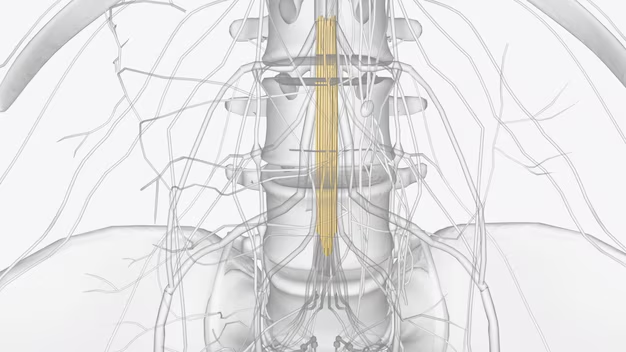
Cauda equina syndrome is a rare but serious spine condition. It needs urgent medical attention, and if not treated in time, it can lead to permanent damage of nerves that control the bladder, bowel, legs and sexual functions.
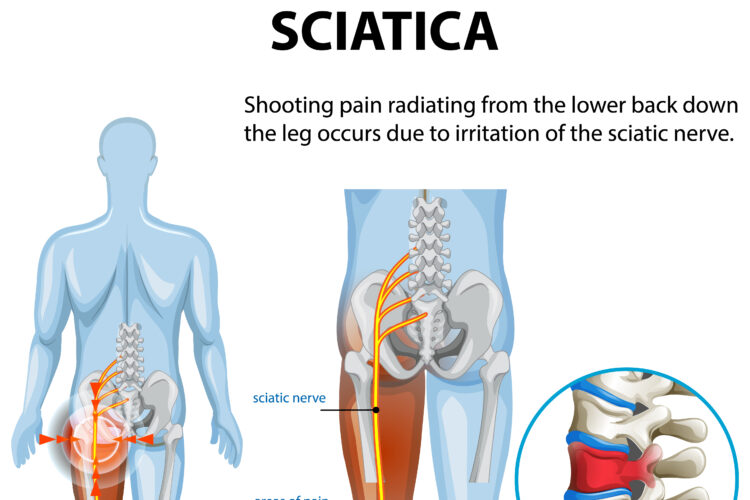
As a physiotherapist, I regularly meet patients in Delhi, Gurgaon, Noida, Ghaziabad, Faridabad and Patna who confuse Cauda Equina Syndrome (CES) with normal sciatica pain or simple low back pain. But CES is completely different and more dangerous. We provide home physiotherapy services at these location for persons suffering from Cauda equina Syndrome.
In this blog, I will explain in simple language:
- What is Cauda Equina Syndrome
- Why does it happen
- Early warning signs
- MRI findings
- Medical + surgical management
- Physiotherapy role in rehabilitation
- How Physiophyte Medicare helps patients in Delhi NCR & Patna in their recovery at home
What is Cauda Equina Syndrome?
Inside our spine, spinal cord ends around L1 level. Below this level, there are a bunch of nerve roots that look like a “horse’s tail”. These nerve roots supply sensation and power to the legs, bladder, bowel and sexual organs.
This bunch of nerves is called Cauda Equina.
When these nerves are compressed badly → it causes Cauda Equina Syndrome.
Major Causes of Cauda Equina Syndrome
| Common Causes | Description |
|---|---|
| Large Disc Herniation (L4-L5 / L5-S1) | The most common cause |
| Severe canal stenosis | Narrowing compresses nerve roots |
| Trauma or fracture | Injury to spine |
| Tumor pressing spinal nerves | Growth compresses nerves |
| Spinal infection / epidural abscess | Rare but possible |
| Post-surgical complications | After spine surgery |
High Risk Patients Include:
- People with long term PIVD (slipped disc)
- People with severe radiculopathy
- Gym lifters lifting heavy weights incorrectly
- People with spinal stenosis who ignore symptoms
Early Warning Signs of Cauda Equina Syndrome
These symptoms are medical emergency red flags.
- Severe low back pain with sharp leg pain on both sides
- Numbness in saddle area (inner thighs, genital region)
- Loss of bladder sensation (urine retention or leakage)
- Loss of bowel control (constipation or accidental stool leakage)
- Severe weakness in legs (difficulty standing or walking)
- Sexual dysfunction (new onset)
If any patient shows these signs → Immediate neurosurgeon/orthopedician referral is required.
Diagnosis
The gold standard test is MRI lumbar spine.
MRI usually shows:
- Large central disc herniation at L4-L5 or L5-S1
- Severe nerve root compression
Treatment Approach for Cauda Equina Syndrome
1) Emergency Hospital Management (First priority)
- Urgent surgical decompression is often needed.
- Ideally within 24–48 hours after symptoms start.
2) Medication Support
- Steroids (doctor prescribed)
- Pain reducers
- Anti inflammatory tablets
3) Physiotherapy – but only after medical clearance
Physiotherapy is mainly required in recovery phase to:
- Improve mobility
- Improve leg strength
- Restore bladder/bowel control (if possible)
- Train proper posture & movement
When Can Physiotherapy Start?
- Physiotherapy generally starts after acute emergency phase
- After surgeon allows mobilization
Physiotherapy Rehabilitation for Cauda Equina Syndrome
Goals:
- Reduce pain
- Improve nerve conduction
- Strengthen lower limb muscles
- Improve gait and balance
- Improve pelvic floor control
Stage 1 – Pain Relief & Nerve Healing (Early Phase)
- Neutral spine posture education
- Gentle nerve gliding (pain free range)
- Pelvic floor activation (Kegel type)
- Breathing pattern training
- Gentle ankle pumps / heel slides
- Gentle soft tissue release (as tolerated)
Electrotherapy (if allowed):
- TENS for pain relief
- IFT (if radicular pain present)
Stage 2 – Progressive Strengthening
When pain reduces and muscles start responding:
- Gluteal strengthening
- Core activation training
- Hip strengthening exercises
- Quadriceps and hamstring strengthening
- Swiss ball exercises (progressively)
Stage 3 – Gait Training & Functional Training
- Balance training
- Proper walking pattern retraining
- Stair training
- Endurance training
Pelvic Floor Physiotherapy (Very Important)
CES affects bladder & bowel control.
Pelvic floor rehabilitation includes:
- Kegel exercises
- Biofeedback (if available)
- Bladder training program
- Urine flow control techniques
- Breathing synchronized pelvic floor activation
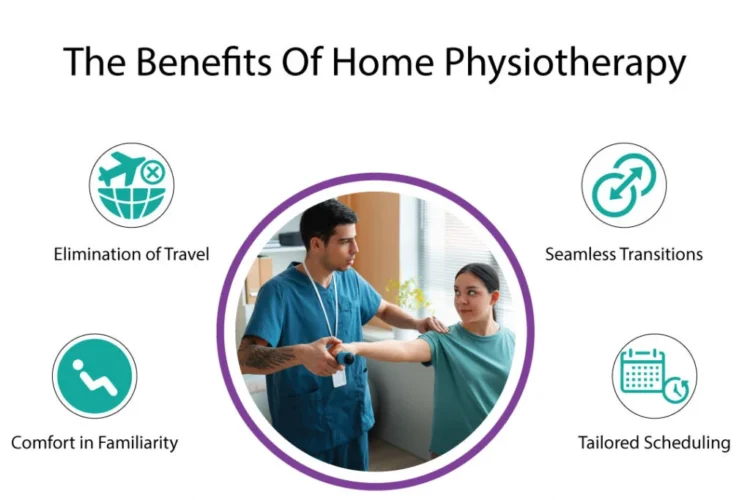
Home Physiotherapy is Extremely Helpful in CES Rehabilitation
Many CES patients cannot travel easily due to weakness or bladder issues.
Home physiotherapy service is the most suitable model for such patients.
Physiophyte Medicare provides home physiotherapy services for spine cases like Cauda Equina Syndrome in:
We bring proper assessment, equipment and recovery planning to patient’s home. This helps in safe and comfortable rehabilitation.
Why Choose Physiophyte Medicare for Cauda Equina Syndrome Rehabilitation?
- One-to-one personalized treatment by expert physiotherapists
- Spine specialist physiotherapists
- Focus on returning strength, function and confidence
- Regular monitoring and progress tracking
- Assistance in bladder/bowel physiotherapy training at home
- Emotional counselling for patient & family
- Home visit convenience for non-mobile patients
We also help patients connect with neurosurgeon/orthopedic spine surgeons if required.
Common Questions Patients Ask
1) Is Cauda Equina Syndrome completely curable?
If treated early, chances of recovery are high. Delay causes permanent nerve damage.
2) Is surgery mandatory?
Not always, but in most cases with urinary symptoms, surgery becomes necessary.
3) How long physiotherapy takes?
Average 2–6 months depending on severity.
4) Can I do exercises myself from YouTube?
No. Wrong movement can worsen nerve weakness. Always do under supervised guidance.
5) Can CES happen to only one leg?
Usually symptoms are bilateral but sometimes initially starts unilateral.
Areas Where We Provide Home Physiotherapy
If you live in Delhi, you can book a home physiotherapy appointment with us at your home.
If you live in Gurgaon, our physiotherapists visit all major sectors.
If you live in Noida, we treat severe spine patients at home.
If you live in Ghaziabad, we provide dedicated home physiotherapy services.
If you live in Faridabad, we offer specialized spine physiotherapy care.
If you live in Patna, Physiophyte Medicare also covers all main areas with home physiotherapy support.
Final Takeaway
Cauda Equina Syndrome is a medical emergency. Early diagnosis and early decompression is the most important factor for recovery.
Physiotherapy plays a key role in post-operative rehabilitation, restoring strength, gait, bladder function and independence.
If you or your family member have severe low back pain with urinary changes – do not delay. Get urgent evaluation.
For physiotherapy support and rehabilitation at home in Delhi NCR & Patna, Physiophyte Medicare is always ready to help.